

The pattern repeats every autumn. A club goes through a demanding European night in midweek, then drops points at the weekend against a side it would normally be expected to beat. Supporters point to tired legs. Pundits point to rotation. Both are usually right at once, and understanding how the two interact can sharpen the way you read the domestic fixture that follows.
A Fuller Calendar Than Ever
The present Champions League format has not reduced the number of matches; it has in fact increased it. Each club now plays eight matches in the league phase against eight different opponents, as opposed to the previous arrangement which involved six games against three. The Europa League and Conference League follow a similar system, with the top eight teams going directly to the last 16 and those finishing from ninth to twenty-fourth having to go through an additional knockout play-off round.
For the clubs in question, this involves having more football in the middle of the week from September to January, more travel, and less time available for recovery between matches. This issue has been highlighted by the player’s representative organisations: FIFPRO has on several occasions expressed concern about the workload of the squads in its player welfare reports, citing the increasing number of matches being played within short recovery periods.
Rotation Is the Visible Part
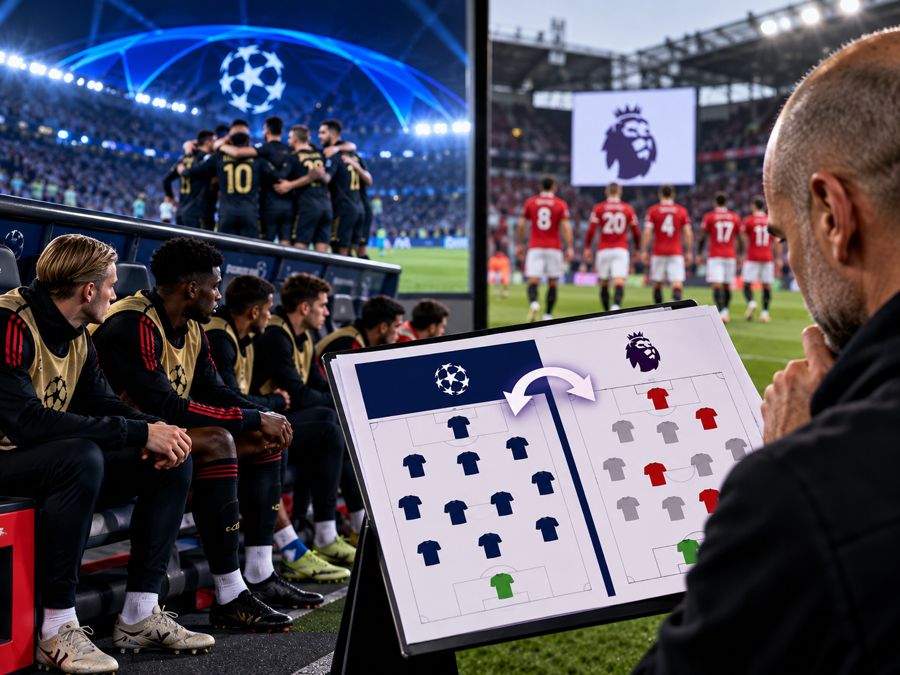
Managers in charge of European campaigns seldom have the same starting eleven available to them three times within a week, and rotation is most obviously seen in the weekend immediately following a European match – particularly when the next domestic game involves an opponent that, in theory, is the weaker side.
That creates a real gap between how a team appears in the league table and who actually takes the pitch. A league leader with four or five changes is a different team from its first-choice XI, and the confirmed line-up, usually released about an hour before kick-off, is often the single most useful piece of information available before you bet.
Fatigue Is the Part Nobody Puts on the Team Sheet
Even when a manager names a full-strength side, the effects of a hard midweek match can still linger. The usual signs are worth watching for:
- A slow start, with the team taking longer than usual to get into the game
- A visible drop in pressing intensity after the hour mark
- More goals conceded late on, as legs tire in the final stretch
Travel compounds it. A Thursday-night away trip in the Europa League followed by a Sunday kick-off can leave a squad with barely two full days of genuine recovery. Clubs with deep, well-rotated squads tend to cope. Clubs running a thin bench often can’t hide it.
Not Every European Night Costs the Same
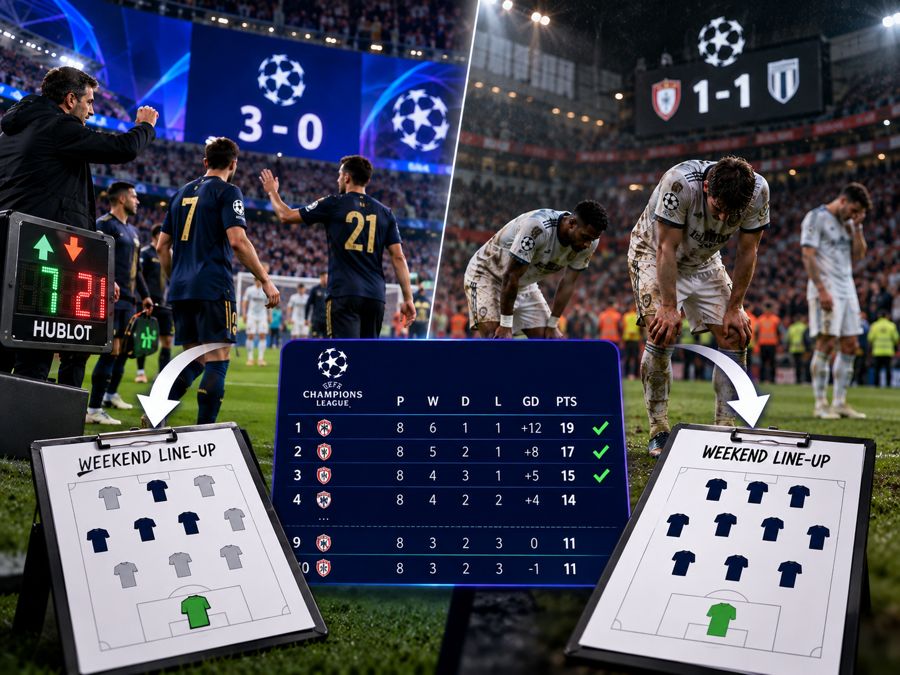
It is more important to take the context into account than the fixture list indicates. When a team wins at home comfortably with a two-goal lead early on, the manager can rest his important players for the last half-hour. On the other hand, a tight away draw that lasts right until the final whistle has a far greater draining effect on the team, no matter what the score says.
What’s at stake in the European competition shapes selection too. A club that has already secured qualification for the next round may well rest first-choice players in a “dead” league-phase match. A club still fighting for a top-eight finish will not. Reading the European table alongside the domestic one gives a far better sense of what a manager is likely to prioritise that week.
How to Actually Use This Before You Bet
That doesn’t mean you should always reject a match against a European club every weekend since it is constantly the case that teams with deep squads succeed in doing so. What you should do is modify your expectations rather than relying solely on the league position. Before playing a match over the weekend it is worth checking:
- When the club last played its European fixture, and where
- Whether that midweek match was physically demanding or comfortable
- How many first-choice players actually started it
- What’s still at stake in the European competition
- The confirmed domestic line-up, once it’s released
Independent prediction sites can be a useful cross-check at this stage. Resources such as aZZbet’s daily match predictions cover European and domestic fixtures side by side, making it easier to spot when a heavy week might affect a result. As with any outside source, use it to pressure-test your own reasoning rather than replace it.
The Effect Compounds As the Season Goes on
This tends to get worse, not better, as the months pass. Squads are fresh in early autumn. By December, with league-phase matches, domestic cup ties and a crowded festive schedule in several countries all overlapping, the cumulative load becomes much harder to manage.
Keeping half an eye on which clubs are juggling several competitions at once is one of the simplest ways to make sense of results that otherwise look like upsets.
Whatever you take from the fixture list, keep any betting within limits you’ve set in advance.